Why Vietnam is a Global Hub for Apparel Manufacturing

by Ly Nguyen on Sep 23, 2026
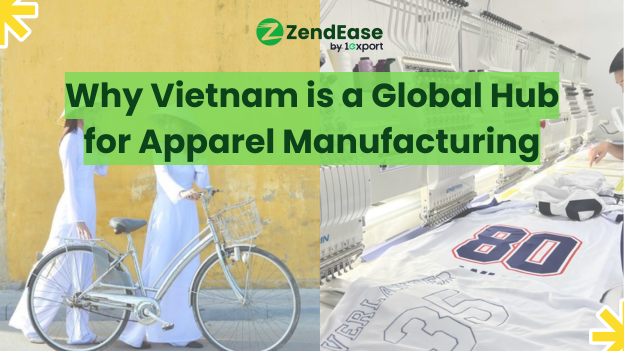
Why Vietnam is a Global Hub for Apparel Manufacturing

Vietnam has become a major apparel manufacturing hub by combining competitive production costs, an experienced garment workforce, established export infrastructure, and access to key markets through multiple trade agreements. For global buyers, Vietnam offers more than lower production costs; it provides a mature manufacturing base that can support both apparel sourcing and supply-chain diversification.

Vietnam's textile and garment industry has developed over decades of export manufacturing, producing everything from basic garments and sportswear to footwear and fashion products for international markets.

For brands looking to diversify their sourcing, Vietnam has become an increasingly important part of the global apparel supply chain.

Why are apparel production costs competitive in Vietnam?

Vietnam remains competitive for labor-intensive apparel manufacturing, where cutting, sewing, finishing, and quality control require significant human input.

This can help manufacturers maintain competitive production costs, particularly for medium- and large-scale orders.

However, buyers should look beyond factory prices alone. Materials, minimum order quantities, packaging, inland transportation, and international shipping all contribute to the final landed cost.

How does Vietnam's garment workforce support the industry?

Vietnam has an experienced workforce built around decades of export-oriented garment production.

Factories across the country regularly manufacture clothing, footwear, and textile products for international customers. This has fostered expertise in areas such as production planning, sewing, finishing, quality control, and export preparation.

Major manufacturing regions are also connected to ports, airports, suppliers, and logistics networks, helping products move from factories into international markets.

How do trade agreements benefit apparel buyers?

Vietnam participates in several major trade agreements, including the CPTPP, EVFTA, UKVFTA, RCEP, and ASEAN trade frameworks.

For eligible products, these agreements can provide preferential market access and potentially reduce import duties in participating markets.

However, preferential tariffs are not automatic. Apparel products must meet the relevant rules of origin and documentation requirements. This is particularly important for garments because fabrics, yarns, and other materials may be sourced from different countries.

Buyers should therefore consider both where the garment is manufactured and where its materials originate.

Vietnam vs. China: How do they compare for apparel manufacturing?

Vietnam and China are both major apparel sourcing markets, but their strengths are different.

Feature Vietnam China
Production costs Competitive for labor-intensive apparel Vary by region and product
Manufacturing scale Strong export garment sector Much larger manufacturing ecosystem
Supply chain Established but some materials are imported Extensive domestic supplier network
Trade agreements Broad network of FTAs Different market-access structure
Key advantage Apparel production and sourcing diversification Scale and supply-chain depth

China continues to offer greater manufacturing scale and a deeper domestic supply chain. Fabrics, trims, packaging, machinery, and other inputs can often be sourced within its large manufacturing ecosystem.

Vietnam does not necessarily replace these advantages. Instead, it gives buyers another established production base and an opportunity to diversify sourcing across multiple markets.

Why do international apparel buyers choose Vietnam?

For most buyers, Vietnam's appeal comes from several advantages working together rather than one single factor.

Competitive production costs make the country attractive for labor-intensive apparel manufacturing, while an experienced garment workforce supports established production and quality-control processes.

Vietnam's trade agreements can also provide market-access advantages for eligible products, while its established ports and logistics networks connect manufacturing regions with international destinations.

Perhaps most importantly, Vietnam gives global brands another sourcing option. Businesses looking to reduce dependence on a single manufacturing market can add Vietnamese suppliers to a broader regional supply chain.

What should buyers consider before sourcing from Vietnam?

Vietnam's manufacturing strengths do not mean it is automatically the right choice for every apparel product.

Before choosing a supplier, buyers should evaluate:

  • Manufacturing capabilities and capacity
  • Minimum order quantities
  • Material availability
  • Quality requirements
  • Production lead times
  • Rules of origin
  • International logistics requirements

Material sourcing deserves particular attention. Some manufacturers rely on imported fabrics or components, which can affect production timelines, costs, and eligibility for preferential tariffs under certain trade agreements.

The best sourcing decision therefore depends on the product and overall supply chain—not simply the lowest factory price.

Final Thoughts

Vietnam's position as a global apparel manufacturing hub comes from the combination of competitive production, an experienced workforce, export infrastructure, trade agreements, and growing integration into international supply chains.

Compared with China, Vietnam has a smaller manufacturing ecosystem and remains dependent on imported materials for some products. At the same time, it provides international buyers with a well-established apparel production base and an additional option for diversifying their sourcing strategy.

For businesses sourcing apparel from Vietnam, manufacturing is only one part of the journey. ZendEase by 1Export supports international logistics from Vietnam, including cargo handling, consolidation where applicable, and air or sea freight arrangements based on shipment requirements.

We value your privacy

We use cookies to provide basic functionality, to enhance your browsing experience, and analyze our traffic. By clicking "Accept All", you consent to our use of cookies.

You can later edit your data preferences by clicking on "Manage Cookies" in the footer.

For iOS Users: To avoid login issues, please disable "Block All Cookies" in Safari settings. Rest assured, we're diligently working on a solution to this matter. Thank you for your patience. If you're still experiencing this issue, contact us at hello@zendease.com.

View our Cookie Policy
Customize your consent preferences

We are committed to providing you with a seamless online experience whenever you login or use our website. One way we achieve this is through the utilization of cookies in our websites. Cookies are small files that carry a small amount of data which may include anonymous unique identifiers. These cookies are saved into your device (computer, smartphone, or tablet) whenever you visit our websites. They serve various important functions that enhance your browsing experience and help us deliver relevant content and services.


Our essential cookies are web storage related cookies and HTTP cookies. These cookies are essential for the basic operation of the website and enables features like our user authentication and maintaining your session during your visit. They are necessary to provide a smooth browsing experience.


Label Purpose Name Cookie Type and Duration

User Authentication

This is used for authentication.

ze_ut , ze_ud , shipit_session

First-party persistent; in 1 day

Consent Preference

This is used to identify which cookies you're allowing 1Export and ZendEase to store into your device.

ze_funct , ze_advert , ze_anal

First-party persistent; in 1 day

These cookies play a crucial role in safeguarding your data and providing you with a secure browsing experience. These cookies can be used for the purpose of preventing unauthorized accesses, session management, CSRF (Cross-Site Request Forgery) protection, etc…


Label Purpose Name Cookie Type and Duration

XSRF TOKEN

This is used for authentication and prevention of yeah.

XSRF-TOKEN

First-party persistent; in less than 6 hours

Google Services

This is used to provide fraud prevention.

ACCOUNT_CHOOSER

Third-party persistent; in 2 years

We use these Cookies to allow users to interact with a service or site to access features that are fundamental to that service. Things considered fundamental to the service include preferences like the user’s choice of language, product optimizations that help maintain and improve a service, and maintaining information relating to a user’s session.


Label Purpose Name Cookie Type and Duration

Google Services

Cookie required to use website options and services.

__Secure-1PSIDCC , __Secure-3PSIDCC

Third-party persistent; in 1 year

Google Services

Cookie required to use website options and services.

__Secure-1PAPISID , __Secure-1PSID

Third-party persistent; in 2 years

We may use cookies for targeted marketing and advertising purposes. These cookies allow us to serve you relevant advertisements and contents based on your interests.


Label Purpose Name Cookie Type and Duration

Google Services

Downloads certain Google Tools and save certain preferences, for example the number of search results per page or activation of the SafeSearch Filter. Adjusts the ads that appear in Google Search.

__gads , __gpi

First-party persistent; in 2 years

Google Services

These cookies are set via embedded youtube-videos. They register anonymous statistical data on for example how many times the video is displayed and what settings are used for playback.

1P_JAR

Third-party persistent; 30 days

Google Services

This cookies is used to collect website statistics and track conversion rates and Google ad personalisation.

NID

Third-party persistent; in 7 months

Google Services

Downloads certain Google Tools and save certain preferences, for example the number of search results per page or activation of the SafeSearch Filter. Adjusts the ads that appear in Google Search.

SIDCC

Third-party persistent; in 1 year

Google Services

Downloads certain Google Tools and save certain preferences, for example the number of search results per page or activation of the SafeSearch Filter. Adjusts the ads that appear in Google Search.

APISID , HSID , SAPISID , SSID

Third-party persistent; in 2 years

These types of cookies help us gather insights into how visitors interact with our website. We use analytics cookies to collect non-identifiable information about your browsing behavior, such as pages visited, time spent on each page, and click-through rates. This information assists us in identifying trends, optimizing content, and enhancing the overall performance of the websites. We use analytics tools such as Google Tag Manager, Meta Pixel, and Google Analytics.


Label Purpose Name Cookie Type and Duration

Google Services

These cookies are used to store and count pageviews. Downloads certain Google Tools and save certain preferences, for example the number of search results per page or activation of the SafeSearch Filter. Adjusts the ads that appear in Google Search.

_ga , _ga_*

First-party persistent; in 2 years

Google Services

These cookies are used to store and count pageviews. Downloads certain Google Tools and save certain preferences, for example the number of search results per page or activation of the SafeSearch Filter. Adjusts the ads that appear in Google Search.

SID , LSID

Third-party persistent; in 2 years

Google Services

This cookies are used to deliver more relevant ads for you and your interests.

__Secure-3PAPISID , __Secure-3PSID

Third-party persistent; in 2 years

Unclassified cookies are cookies that we are in the process of classifying, together with the providers of individual cookies.


Name Cookie Type and Duration

OTZ

Third-party persistent; in 1 month

SMSV

Third-party persistent; in 2 years

__Host-1PLSID

Third-party persistent; in 2 years

__Host-3PLSID

Third-party persistent; in 2 years

__Host-GAPS

Third-party persistent; in 2 years