How to Pick the Right Freight Forwarder in Vietnam: A Practical Checklist for SMEs
by Ly Nguyen on Apr 14, 2026
Choosing the right freight forwarder in Vietnam often comes down to one thing: fit.
For SMEs, the best logistics partner is not necessarily the biggest or most well-known. Instead, it’s the one that understands your shipment type, communicates clearly, and supports your operations as you grow.
This guide walks through what freight forwarders do, why they matter, and how to evaluate the right one for your business.
What Does a Freight Forwarder Actually Do?
A freight forwarder is a logistics partner that helps businesses move goods from one country to another.
Rather than transporting cargo directly, they coordinate the entire shipping process, including:
- Booking cargo space (air or sea)
- Preparing shipping and customs documentation
- Managing cargo consolidation
- Coordinating delivery from origin to destination
In practice, they act as the link between your business and global shipping networks.
Understanding this role is important because choosing a forwarder means choosing who will manage a critical part of your supply chain.
Why Do SMEs Need a Freight Forwarder?
For SMEs, international shipping can quickly become complex without the right support.
Common challenges include:
- Delays caused by incorrect documentation
- Unclear or fluctuating shipping costs
- Limited visibility on shipment status
- Difficulty coordinating with multiple logistics partners
A freight forwarder helps reduce these issues by managing logistics operations and keeping shipments on track.
This allows businesses to spend less time dealing with shipping problems and more time focusing on growth.
However, not all forwarders offer the same level of service, which makes choosing the right one especially important.
What Should You Look for in a Freight Forwarder?
Once you understand their role, the next step is choosing the right partner.
For SMEs, this decision usually comes down to a few practical factors — not just cost, but how well the forwarder fits your day-to-day operations.
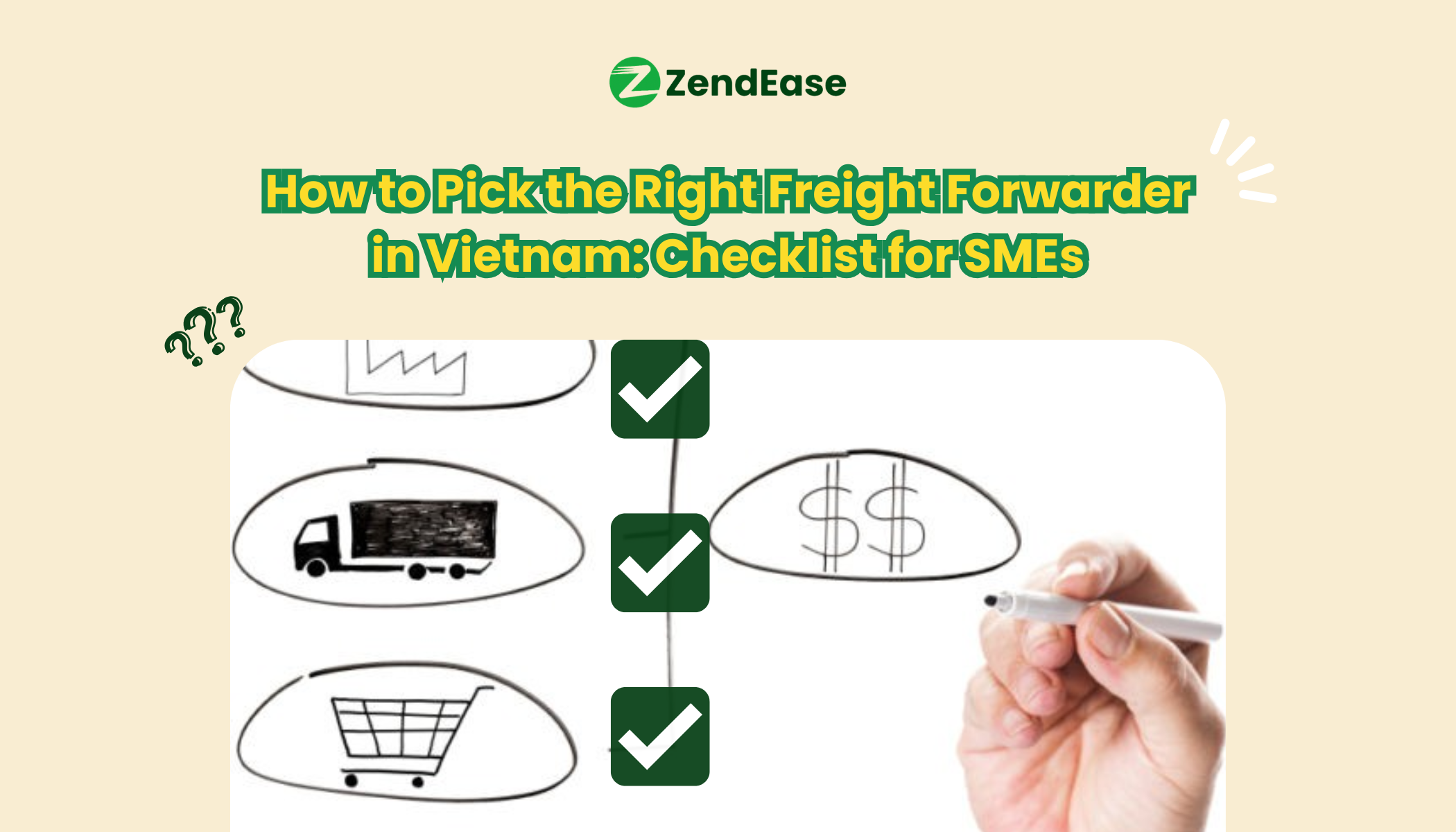
Here’s a checklist to guide your evaluation.
Do They Have Experience With Your Type of Shipment?
Not all freight forwarders handle the same types of goods.
Some focus on bulk cargo, while others specialize in e-commerce or smaller shipments.
This matters because each product category comes with different handling requirements and documentation standards.
Working with a forwarder that understands your product type can help reduce delays and avoid compliance issues.
Are Their Pricing and Fees Transparent?
After confirming their experience, pricing is the next key factor.
Shipping costs depend on weight, volume, shipping method, and destination — but a reliable forwarder should clearly explain:
- What is included in the quote
- Any additional or variable fees
- How pricing may change under different conditions
If pricing is unclear from the start, it often leads to unexpected costs later.
Can You Track Your Shipment Easily?
Visibility is an important part of modern logistics.
You should be able to:
- Track shipment status
- Receive updates on delays or changes
- Know where your cargo is throughout the process
Some forwarders offer digital tracking systems, while others rely on manual updates.
For SMEs managing multiple shipments, better visibility can make planning much easier.
How Strong Is Their Customer Support?
Even with good planning, shipping issues can still happen.
When they do, responsive support becomes critical.
A reliable freight forwarder should:
- Respond in a timely manner
- Provide clear and useful updates
- Offer solutions when problems arise
Strong communication can make a significant difference in how smoothly shipments are handled.
Do They Offer the Services You Actually Need?
Freight forwarding services can vary widely between providers.
Some offer:
- Door-to-door delivery
- Warehouse storage
- Shipment consolidation
- Customs clearance support
For SMEs, consolidation can be especially useful, allowing smaller shipments to be combined and shipped more cost-effectively.
Choosing a forwarder that aligns with your actual needs can improve both efficiency and cost control.
How Do Different Freight Forwarders Compare?
Not all freight forwarders operate in the same way, and understanding the differences can help you make a better decision.
Traditional freight forwarders
- Strong global networks
- Suitable for large-scale or complex shipments
- Often involves more manual coordination
Digital or SME-focused forwarders
- Easier booking and communication
- Better shipment visibility
- More flexible for smaller or frequent shipments
For SMEs, the second option is often more practical — especially when simplicity and flexibility are priorities.
Where Does ZendEase Fit?
ZendEase is a logistics provider focused on cross-border shipping from Vietnam, particularly to Southeast Asia markets such as the Philippines.
In practice, this type of service is generally more aligned with:
- SMEs and growing businesses
- E-commerce or smaller-volume shipments
- Shipments that benefit from consolidation and simpler processes
ZendEase supports services such as:
- Air and sea freight forwarding
- Shipment consolidation
- Basic export documentation support
- Cross-border coordination between Vietnam and destination markets
At the same time, it may not be the best fit for:
- Large-scale industrial shipments
- Highly complex, multi-country logistics operations
- Businesses requiring extensive global coverage
Because of this, businesses should evaluate whether this type of service model matches their logistics needs.
You can view ZendEase’s forwarding service to better understand how it works in practice.
What Are Common Mistakes SMEs Should Avoid?
Before making a final decision, it helps to be aware of common pitfalls.
Many SMEs:
- Choose based on price alone
- Do not clarify what services are included
- Overlook communication quality
- Do not check experience with their specific products
Avoiding these mistakes can help prevent unnecessary delays and unexpected costs.
Final Thoughts
Choosing the right freight forwarder is less about finding the “best” provider overall and more about finding the right fit for your business.
For SMEs, this often means prioritizing:
- Clear communication
- Transparent pricing
- Relevant experience
- Flexible services
With the right partner, shipping becomes more predictable and easier to manage — creating a stronger foundation for growth in both regional and international markets.
If you're exploring freight forwarding options from Vietnam, you can also look into different service providers and compare how they operate.
You can view ZendEase’s forwarding service to understand how one SME-focused provider approaches cross-border shipping in Southeast Asia.