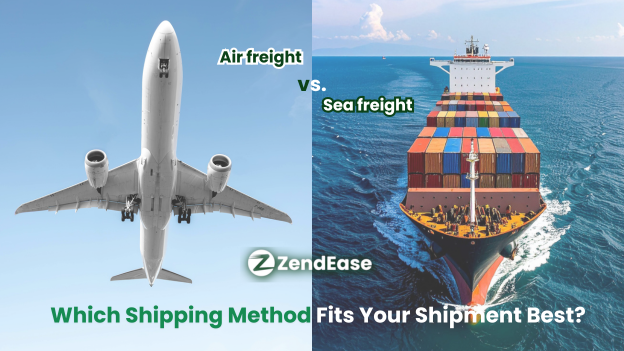
Air Freight vs Sea Freight: Which Shipping Method Fits Your Shipment Best?
by Ly Nguyen on May 13, 2026
1. Understanding the Core Difference: Speed vs. Cost Efficiency
Air and sea freight are designed for different shipping needs. Air freight focuses on speed and flexibility, while sea freight is built for larger shipment capacity and lower shipping costs.
Choosing the right method is less about which option is "better" overall and more about what your shipment actually requires. For some businesses, faster delivery is critical. For others, reducing shipping costs across larger volumes matters more.
2. How Do Air Freight and Sea Freight Compare?
The biggest difference between the two methods comes down to transit time, shipment size, and cost structure.
| Factor | Air Freight | Sea Freight |
|---|---|---|
| Transit Time | Faster (typically days) | Slower (typically weeks) |
| Shipping Cost | Higher per kg | Lower cost for larger volumes |
| Best For | Urgent or high-value cargo | Bulk or non-urgent cargo |
| Shipment Size | Small to medium volume | Medium to large volume |
| Main Advantage | Speed and flexibility | Cost efficiency |
While air freight costs more, businesses often use it to avoid inventory shortages or urgent delays. Sea freight, meanwhile, becomes much more cost-efficient as shipment volume increases.
3. When Does Air Freight Make More Sense?
Air freight is usually the better option when delivery speed directly affects operations or sales. This commonly includes:
- Urgent inventory restocking
- Product launches with fixed timelines
- High-value or time-sensitive goods
- Smaller shipments that need fast turnaround
For example, businesses may choose air freight during sudden demand spikes or when delayed inventory could disrupt operations.
Because flights operate frequently across major routes, air freight also offers more flexibility when schedules change unexpectedly.
4. When Is Sea Freight the Better Option?
Sea freight becomes more practical when shipment volume increases, and delivery timelines are more flexible. It is commonly used for:
- Bulk inventory shipments
- Industrial materials or heavy cargo
- Regular replenishment cycles
- Cost-sensitive products
As shipment size grows, sea freight significantly lowers the shipping cost per unit. The trade-off is longer transit time and more planning around schedules, ports, and inventory flow.
For businesses with stable forecasting, this longer transit period is often manageable and more cost-efficient overall.
5. Can Businesses Use Both Air and Sea Freight Together?
Yes — and many businesses already do.
In practice, companies often combine both methods depending on urgency and shipment structure. A common strategy is shipping a smaller portion by air to meet immediate demand, while sending the remaining inventory by sea to reduce overall shipping costs.
This approach helps businesses balance speed, inventory availability, and budget at the same time.
6. What Other Operational Factors Should Businesses Consider?
Beyond speed and freight cost, there are several operational details that can influence the final decision.
Volumetric Weight
Air freight pricing is heavily affected by volumetric weight, meaning bulky packaging can increase costs quickly even if the cargo itself is lightweight.
Port and Documentation Coordination
Sea freight usually involves more coordination between ports, containers, and shipping documentation. Delays or documentation errors can sometimes lead to additional storage charges or clearance delays.
Seasonal Shipping Conditions
Peak seasons affect both methods differently. Air freight rates may rise during urgent shipping periods, while sea freight may experience vessel congestion or container shortages. Planning earlier helps businesses reduce these risks.
7. So Which Shipping Method Should You Choose?
There is no universal "better" option between air freight and sea freight.
Air freight is generally more suitable when:
- Delivery speed is critical
- Shipment volume is smaller
- Delays would affect operations or sales
Sea freight is usually more practical when:
- Shipment volume is larger
- Cost efficiency is the priority
- Delivery timelines are more flexible
The right decision depends on the urgency, shipment structure, and operational needs behind the shipment itself.
Final Thoughts
Air freight and sea freight solve different logistics challenges, which is why many businesses rely on both depending on the situation.
The more clearly businesses understand their shipment timelines, inventory needs, and shipping priorities, the easier it becomes to choose the right method without creating unnecessary cost or delays.
At ZendEase by 1Export, we work with businesses navigating both air and sea forwarding from Vietnam across different shipment sizes and timelines. Depending on the shipment, one method may make more sense than the other — or sometimes a combination of both.
If you're exploring shipping options from Vietnam, you can view ZendEase's forwarding services or reach out to the team for a more detailed breakdown based on your shipment structure.